United States Department of Agriculture
Silent SpringThe United States Department of Agriculture occupies a consequential and conflicted place in Silent Spring: it is both the institution directing large-scale pesticide campaigns and a central target of the book’s scrutiny of how those campaigns were justified, researched, and carried out. The agency’s programs promise greater agricultural production or the eradication of pests, but the cases Carson examines repeatedly expose a gap between those promises and the damage to wildlife, livestock, pets, and public confidence. Her account also sets these choices against a broader landscape: one in which the agency’s intervention can disrupt ecological relations formed over long periods, while less destructive alternatives remain possible.
Agricultural policy and chemical control
The agency’s rationale for pesticide use is challenged in the context of American crop surpluses. The argument that ever-expanding pesticide use is necessary to maintain farm production sits uneasily beside the fact that, in 1962, taxpayers were paying more than one billion dollars a year to store surplus food. The contradiction is institutional as well as economic: one branch of the Agriculture Department sought to reduce production, while another said that acreage reduction under the Soil Bank might stimulate farmers to use chemicals to maximize production on the land still cultivated. In Carson’s presentation, pesticide use is therefore not simply a response to scarcity; it is encouraged within a system struggling with excess.
This conflict connects national policy to the agency’s treatment of particular landscapes. On the western plains and mountain slopes, sage had developed in a harsh climate over immense spans of time, alongside animal life adapted to the same conditions. The pronghorn antelope and sage grouse belong to this interdependent habitat. Yet land-management agencies, under pressure from cattlemen seeking more grazing land, treated sage as an obstacle to grassland. The desired improvement—more grass and less sage—could therefore mean replacing a complex native system with a simplified landscape shaped around a single use.
The consequences of such broad intervention extend beyond the intended target. Carson points to an example in Bridger National Forest, where the United States Forest Service sprayed about 10,000 acres of sage country. That episode illustrates the larger problem she identifies in indiscriminate chemical programs: spraying may eliminate plants other than those it was meant to suppress, with consequences for animals dependent on native vegetation. The agency’s policy context is thus part of an ecological history, not merely a sequence of pest-control decisions.
Programs and the reach of eradication
The reach of pesticide programs grew beyond rural fields. By the late 1950s, the aerial distribution of lethal chemicals affected towns and cities as well as forests and cultivated land, prompting misgivings among the public. Carson singles out two mass-spraying campaigns of that period, against the gypsy moth and the fire ant, as events that intensified those doubts. The campaigns gave national scale to a governing habit: once a pest was framed as a threat, widespread treatment could be presented as necessary before the costs and uncertainties had been resolved.
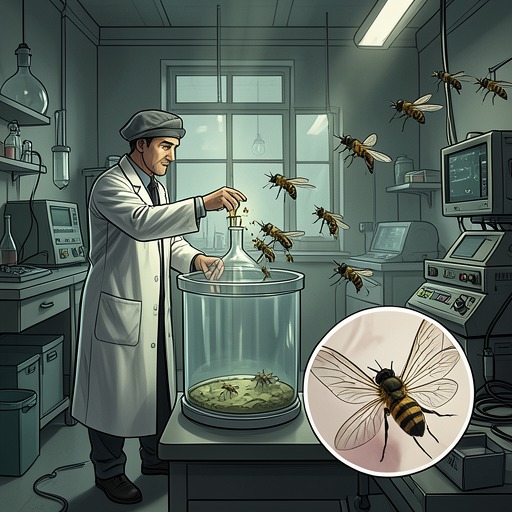
The gypsy moth campaign makes that reversal especially plain. The insect had been present in the country for many years without creating a crisis that required desperate measures. Natural controls, quarantine, and local spraying had, according to the Agriculture Department’s own 1955 assessment, achieved outstanding restriction of the moth’s spread and damage. Yet only a year after that favorable report, the department’s Plant Pest Control Division began planning blanket spraying of several million acres each year, with the stated intention of eventual eradication. Carson contrasts the earlier evidence of successful restraint with the new scale and ambition of the program: eradication became the declared end even though existing methods had already limited the problem.
A related tension appears in the Japanese beetle story. After its introduction to the United States, the beetle initially increased rapidly without the restraints operating in its native range. By 1945, however, it had become a pest of only minor importance through much of the territory it had invaded. Carson attributes much of that decline to the importation of parasitic insects from the Far East and the establishment of diseases fatal to the beetle. The history complicates the case for chemical eradication: the pest’s trajectory had already changed through biological forces, showing that its presence did not automatically require a permanent campaign of broad poisoning.
The fire-ant campaign
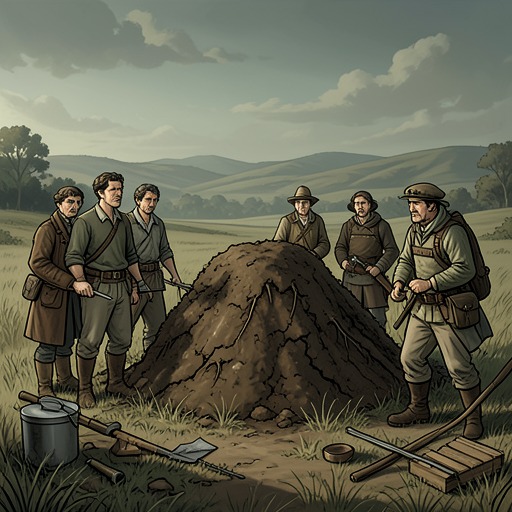
The fire ant was not always treated as an urgent national menace. Carson says that officials and private interests had shown little concern that it threatened crops or livestock; with the development of powerful chemicals, the official attitude changed abruptly. In 1957, the Agriculture Department mounted a major publicity campaign, using government releases and motion pictures to present the ant as a serious danger. The framing helped win congressional support, including claims that the ant threatened southern agriculture by destroying crops and endangered wildlife by attacking the young of ground-nesting birds. Carson notes that those representations were later discredited.
The agency launched the program in 1958 despite unresolved objections. About one million acres were treated in its first year, so any research conducted afterward was, in Carson’s pointed formulation, effectively a postmortem. As studies accumulated from state and federal wildlife biologists and several universities, they documented damage ranging up to the complete destruction of wildlife on some treated areas. Poultry, livestock, and pets were killed as well. The department, Carson writes, brushed aside evidence of harm even as the consequences became visible.
The danger did not end at the boundaries of treated land. In one account of the campaign’s residues, 90 percent of sampled birds contained dieldrin or a form of heptachlor, at levels reaching 38 parts per million. Woodcocks that wintered in Louisiana and bred farther north carried the poison in their bodies. Their exposure could be traced through their food: woodcocks feed heavily on earthworms, probing the ground with their long bills, and surviving worms in Louisiana had been contaminated. A program directed against ants thus reached birds through the soil and the food they ate, crossing both habitat and seasonal migration.
The campaign also revealed how little basic information had been secured before treatment began. In 1959, investigations in Louisiana and Texas found that no tests had been made to determine whether milk was contaminated with pesticides. Research into heptachlor’s particular properties came after the campaign was underway; Carson remarks that it may be more accurate to say that someone looked up previously published research, since the crucial fact was already available. She concludes that the department proceeded without elementary investigation of the chemical or, if it did investigate, ignored what it found. The failure was not simply that a new study had not yet been completed: relevant knowledge existed, while basic questions about exposure remained unanswered.
Failure, retreat, and significance
The program’s results were especially difficult to reconcile with its promise of eradication. Louisiana later reported more infested acres than at the campaign’s beginning. Florida likewise reported more fire ants than before the program and abandoned the idea of broad eradication, turning instead toward a more limited approach. These developments did not erase the damage already done, but they showed that the campaign’s expansive method had failed even on its own terms. The contrast between large-scale treatment and the eventual turn toward narrower control reinforces Carson’s criticism of policies that substitute a blanket operation for measured, locally responsive action.
Carson presents the Agriculture Department’s role as more than a collection of mistaken technical choices. Publicity helped define the fire ant as an emergency; representations used to secure congressional backing were later discredited; treatment began before adequate research; and subsequent evidence of ecological injury was brushed aside. That sequence makes the distribution of authority and risk visible: the department could set a campaign in motion across vast areas, while wildlife, farm animals, pets, and communities bore consequences that the initial case for action had not adequately addressed.
Across the book’s cases, the agency’s institutional influence lies in its power to translate a preferred vision of production and pest eradication into landscape-scale chemical action. Yet Carson’s examples also reveal the limits of that vision. Crop surpluses complicate the claim that more chemical intensity is needed to feed the country; natural controls and introduced parasites complicate the assumption that pests must be eradicated; and the fire-ant campaign’s documented losses challenge the idea that broad treatment is a manageable price for control. The United States Department of Agriculture becomes, in this account, a test of whether public authority can respond to ecological evidence before its decisions turn a targeted intervention into a wider, persistent harm.